Subcategorías de Pneumatics
Subcategories of Pneumatics
Rod cylinders convert compressed air energy into linear motion by means of a piston connected to an output rod. They are used in automation and machinery to push, pull or position elements reliably.

Rodless cylinders provide linear motion without an external rod, helping save space and allowing long strokes. They are suitable for applications where compact design, guiding or handling is required in automated lines.

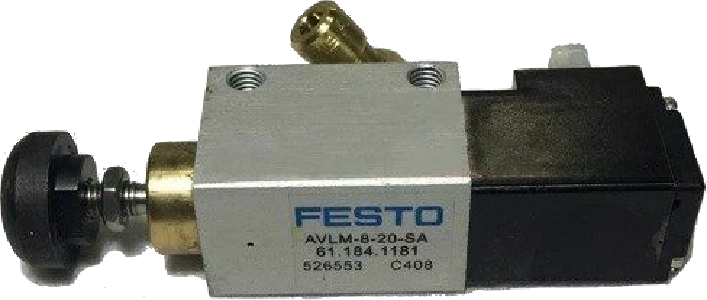
Electrically actuated valves control the passage of compressed air by means of an electrical signal. They are commonly used in industrial automation because they are easy to integrate with control panels, PLCs and automated systems.
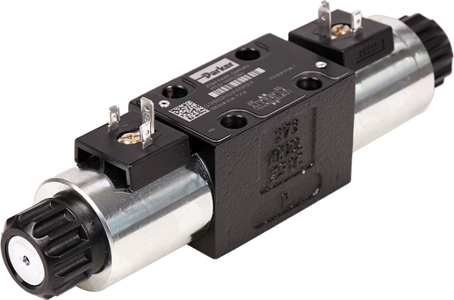
Pneumatically actuated valves use an air signal to control the opening, closing or switching of the circuit. They are suitable for installations where pneumatic logic and coordination between different process stages are required.
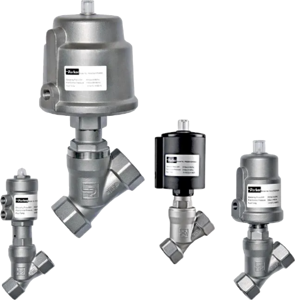
Mechanically actuated valves are operated by direct contact using elements such as levers, rollers or push buttons. They are used in simple operations or position-dependent functions.
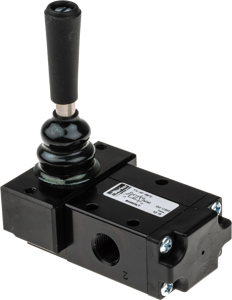
Flow control valves allow the amount of air flowing through the system to be adjusted, directly affecting the speed of pneumatic actuators. They are essential for achieving controlled, smooth movement adapted to each application.
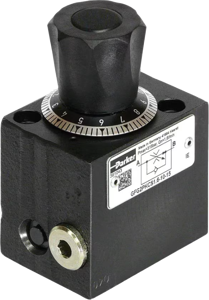
Pressure regulators adjust and maintain air pressure within suitable operating values. They are essential for protecting components and ensuring stable operation.
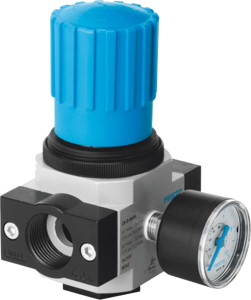
Compressed air preparation includes equipment used to filter, regulate and, when required, lubricate air before use. It improves performance and extends the lifespan of pneumatic systems.
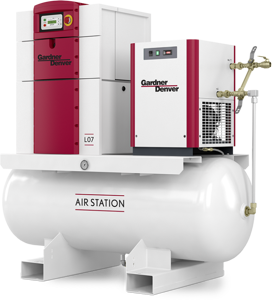
Pneumatic quick couplings allow air lines to be connected and disconnected quickly and safely. They are widely used in installations that require fast assembly, simple maintenance and frequent changes of tools or equipment.
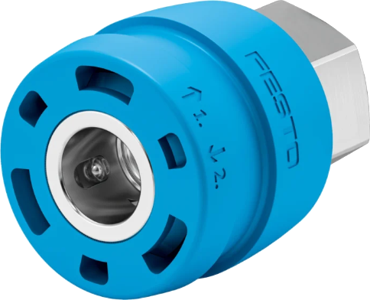
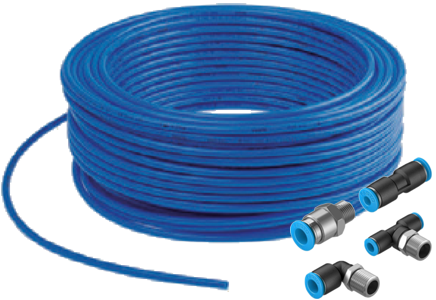
Fittings and tubing are used to route and distribute compressed air between the different points of an installation. They are basic elements in any pneumatic system and must ensure sealing, compatibility and ease of assembly.
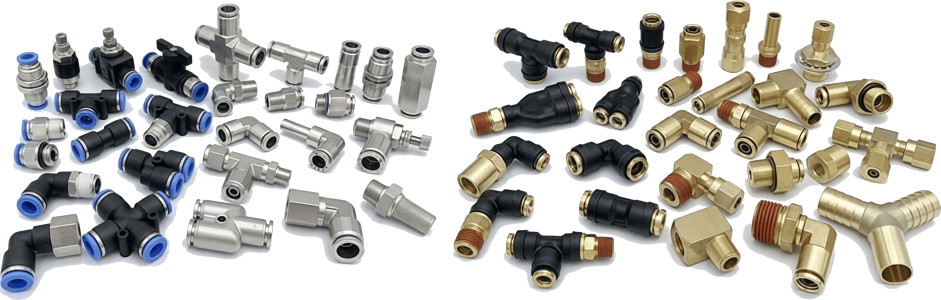
This subcategory includes assembly and connection elements for pneumatic installations, such as brackets, joints and auxiliary parts. These components are required to complete the installation and adapt the system to each working need.
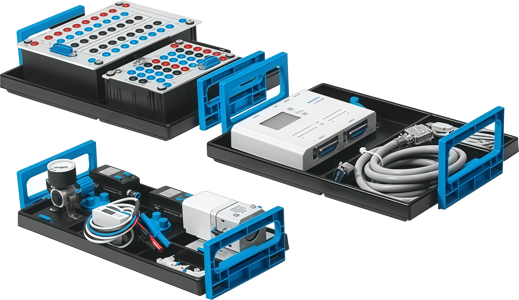
Pneumatic control systems include components used to manage sequences, operations and automation tasks within an installation. They make it possible to coordinate the operation of cylinders, valves and actuators according to process requirements.
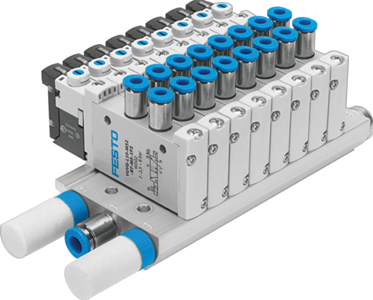
Pneumatic valve manifolds integrate multiple valves into a single compact unit, enabling centralised distribution and control of compressed air. They simplify installation, reduce wiring and improve maintenance in automated systems.
Cylinder valve units integrate actuation and control functions directly linked to pneumatic cylinder movement. They help reduce installation size and simplify assembly in applications where space and response time are important.